
Appearance
Monitoring on TRT
TRT isn't something you start and forget about. Regular monitoring is essential to ensure you're getting the benefits while minimizing risks. This chapter covers what to watch and why.
The Monitoring Schedule
| Timeframe | What to Do |
|---|---|
| Baseline (before starting) | Full panel including PSA, CBC, metabolic panel |
| 6-8 weeks | First follow-up labs, assess response |
| 3 months | Re-evaluate, adjust if needed |
| 6 months | Comprehensive check-in |
| Ongoing | Every 6-12 months once stable |
More frequent monitoring is appropriate when:
- You're new to TRT
- You've recently changed your dose
- You have concerning symptoms
- Your previous labs showed something borderline
Once you're stable for 6+ months with consistent labs, annual or biannual testing is usually sufficient.
The Key Things to Monitor
1. Hematocrit and Hemoglobin
This is the most common side effect of TRT that requires monitoring.
Testosterone stimulates red blood cell production. Too many red blood cells makes your blood thicker, increasing the risk of blood clots, stroke, and cardiovascular events.
| Hematocrit Level | Status | Action |
|---|---|---|
| <50% | Normal | Continue monitoring |
| 50-52% | Elevated | Monitor more closely, consider intervention |
| 52-54% | Concerning | Reduce dose, increase monitoring, consider blood donation |
| >54% | High | Intervention needed, possibly hold TRT |
Hemoglobin follows similar patterns: >18 g/dL warrants attention.
Think of your blood like tomato sauce. A little thick is fine. Too thick, and it doesn't flow well through the pipes (blood vessels). Eventually, it can clog.
Managing Elevated Hematocrit
If hematocrit climbs too high: lower TRT dose, increase injection frequency, donate blood (or therapeutic phlebotomy), stay hydrated, and address sleep apnea if present.
2. Blood Pressure
Testosterone can affect blood pressure through several mechanisms:
- Increased red blood cell count (thicker blood)
- Water retention
- Effects on blood vessel walls
- Changes in kidney function
| Blood Pressure | Status |
|---|---|
| <120/80 | Optimal |
| 120-129/<80 | Elevated |
| 130-139/80-89 | Stage 1 hypertension |
| ≥140/≥90 | Stage 2 hypertension |
Monitor your blood pressure at home - Don't just rely on occasional doctor visits. Get a home blood pressure cuff and check regularly, especially in the first few months of TRT.
3. Sleep Apnea
TRT can worsen sleep apnea or unmask previously undiagnosed cases.
If you develop:
- New snoring
- Waking up gasping
- Morning headaches
- Excessive daytime sleepiness
...get evaluated for sleep apnea. It's dangerous on its own AND worsens many health markers that TRT is supposed to improve.
4. Liver and Kidney Function
The comprehensive metabolic panel (CMP) checks:
- AST/ALT (liver enzymes)
- BUN/Creatinine (kidney function)
- Electrolytes
These should remain stable on TRT. Significant changes warrant investigation.
Note about transient elevations:
Intense exercise can temporarily raise AST and ALT. If you lifted heavy the day before labs, you might see elevated liver enzymes that aren't actually liver damage. Mention your exercise schedule when discussing results with your doctor.
5. Lipid Profile
TRT can affect cholesterol:
- May slightly lower HDL ("good" cholesterol)
- Variable effects on LDL and triglycerides
- Effects are generally modest at true TRT doses
Monitor lipids at baseline and periodically. Significant negative changes may warrant attention.
6. PSA (Prostate-Specific Antigen)
The prostate cancer fear is overblown (see Chapter 16), but PSA should still be monitored.
TRT typically causes a small PSA increase as prostate tissue grows to its natural size. This is expected and not concerning.
What IS concerning:
- Rapid PSA rise (>1.4 ng/mL/year)
- Very high absolute PSA
- Doubling in short period
| PSA Change | Interpretation |
|---|---|
| Small increase, stable | Normal on TRT |
| 0.5-1.0 ng/mL increase | Often acceptable, monitor |
| Rapid or large increase | Needs urological evaluation |
7. Estradiol
Covered in Chapter 12. Monitor with sensitive assay. Treat symptoms, not numbers.
8. Testosterone Levels (Free and Total)
Focus on FREE testosterone, not just total testosterone.
Always get SHBG tested along with total testosterone so you can calculate free testosterone. The goal of TRT is to optimize free testosterone - the amount actually available to your tissues.
- A man with high SHBG might need total testosterone of 1000+ ng/dL to achieve adequate free testosterone
- A man with low SHBG might do great with total testosterone of 500 ng/dL
- Target free testosterone: 15-25 ng/dL for most men
Don't let anyone tell you your total testosterone is "too high" if your free testosterone is right where it should be.
Testing at trough (before injection) tells you your minimum level. See Chapter 5 for details.
The Symptom Check
Labs aren't everything. Regularly assess how you feel:
Positive signs (TRT working):
- Improved energy
- Better mood
- Healthy libido
- Good sleep quality
- Recovery from exercise
- Mental clarity
Warning signs (something's off):
- Persistent fatigue
- Mood swings or irritability
- Reduced libido
- Poor sleep or new snoring
- Shortness of breath
- Headaches
- Swelling in legs/ankles
- Acne or oily skin (may need dose adjustment)
Side Effects to Watch For
Acne
Common, especially early on. Usually improves with time. May indicate dose is too high or estradiol imbalance.
Hair Changes
If you're genetically predisposed to male pattern baldness, TRT may accelerate it. Monitor and decide if it's acceptable to you. Some men use finasteride (blocks DHT) but this has its own considerations.
On hair loss: TRT doesn't cause baldness in men who weren't going to go bald anyway. It may speed up a process that was already programmed in your genes.
Some men accept this trade-off. Others find it unacceptable. There's no right answer - it's personal.
Testicular Atrophy
Expected if not using HCG. See Chapter 11: Fertility & TRT for details on why this happens and how HCG can prevent it.
Mood Changes
TRT should improve mood. If you're experiencing:
- Increased aggression
- Anxiety
- Depression
...your dose may be too high, estradiol may be off, or there's another issue to address.
Red Flags: When to Contact Your Doctor Immediately
Seek immediate medical attention if you experience:
- Chest pain or pressure
- Shortness of breath
- Sudden severe headache
- Vision changes
- Leg pain/swelling (possible blood clot)
- Signs of stroke (face drooping, arm weakness, speech difficulty)
- Severe abdominal pain
- Blood in urine
These could indicate serious complications.
Creating a Monitoring Log
Consider tracking:
- Blood pressure (weekly or more often)
- Weight (weekly)
- How you feel (energy, mood, libido - weekly notes)
- Sleep quality
- Workout recovery
- Any side effects
This helps you and your doctor see patterns over time and make better decisions.
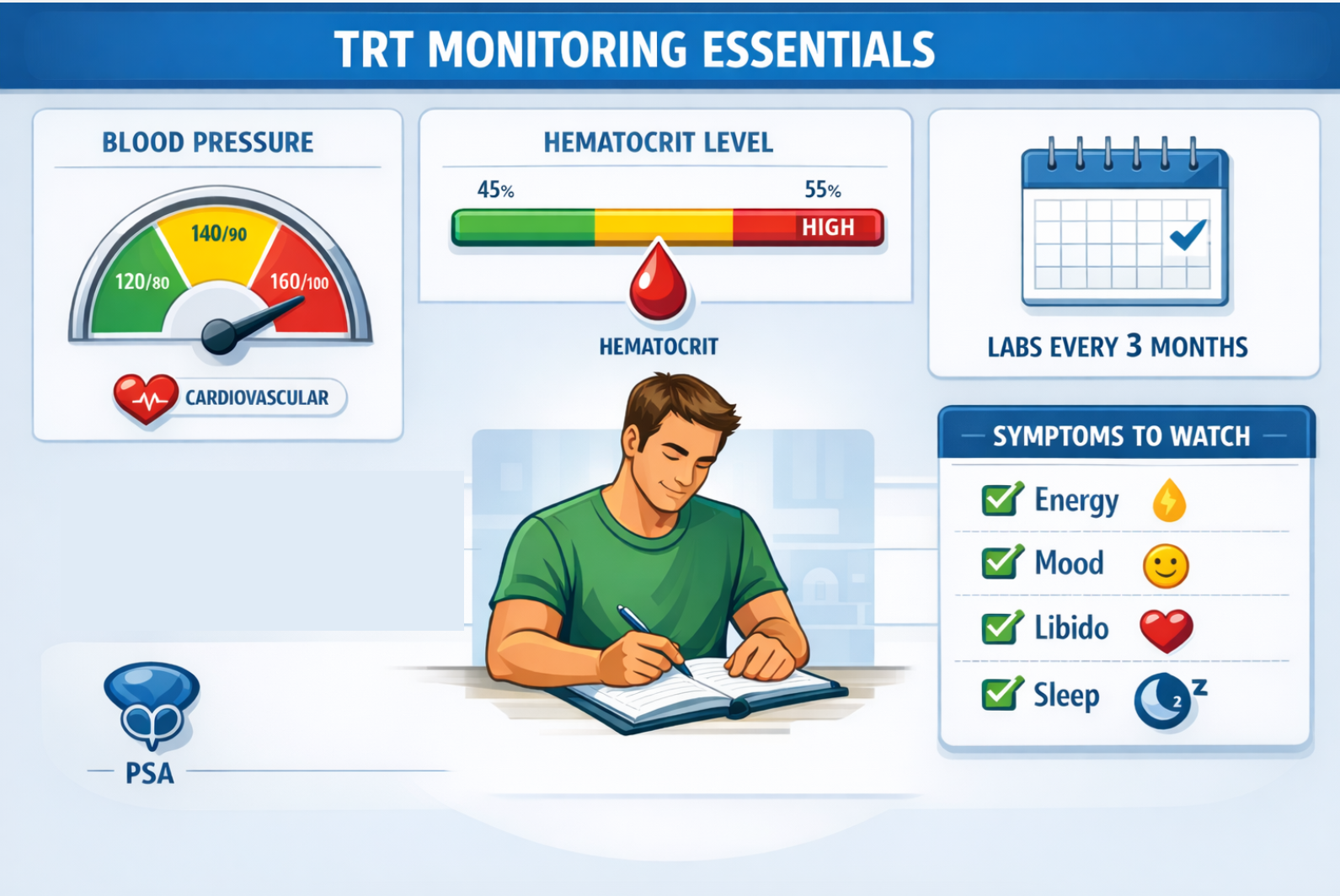
Quick Recap
Key Markers to Monitor
- Free testosterone (calculated from Total T + SHBG) - The actual target
- Hematocrit/Hemoglobin - Most common issue, risk of blood clots
- Blood Pressure - Check at home regularly
- Sleep apnea symptoms - Can worsen on TRT
- Lipids - Monitor periodically
- PSA - Watch for rapid changes, not small increases
- Liver/kidney function - Should stay stable
- Estradiol - Sensitive assay, treat symptoms
Testing Schedule
- Before starting: Full baseline
- 6-8 weeks: First follow-up
- 3-6 months: Adjustment period
- Ongoing: Every 6-12 months when stable
Red Flags
- Hematocrit >54%
- Blood pressure consistently elevated
- New snoring or sleep issues
- Rapid PSA rise
- Unusual symptoms
Next up: Long-Term Considerations - What to expect years into TRT, aging on TRT, and lifelong management.