
Appearance
Signs of Low Testosterone
Everyone knows low testosterone affects sex drive. But that's just the tip of the iceberg. Low T can impact nearly every aspect of how you feel and function - and many of those effects are overlooked or blamed on something else.
The Classic Symptoms
Let's start with what most people think of:
Sexual Function
- Low libido - Decreased interest in sex
- Erectile dysfunction - Difficulty getting or maintaining erections
- Reduced spontaneous erections - Fewer morning erections
- Decreased sexual satisfaction - Things just don't feel as good
Think of testosterone as the fuel for your sexual engine. When the tank is low, the engine sputters. It might still run, but not like it used to.
Physical Changes
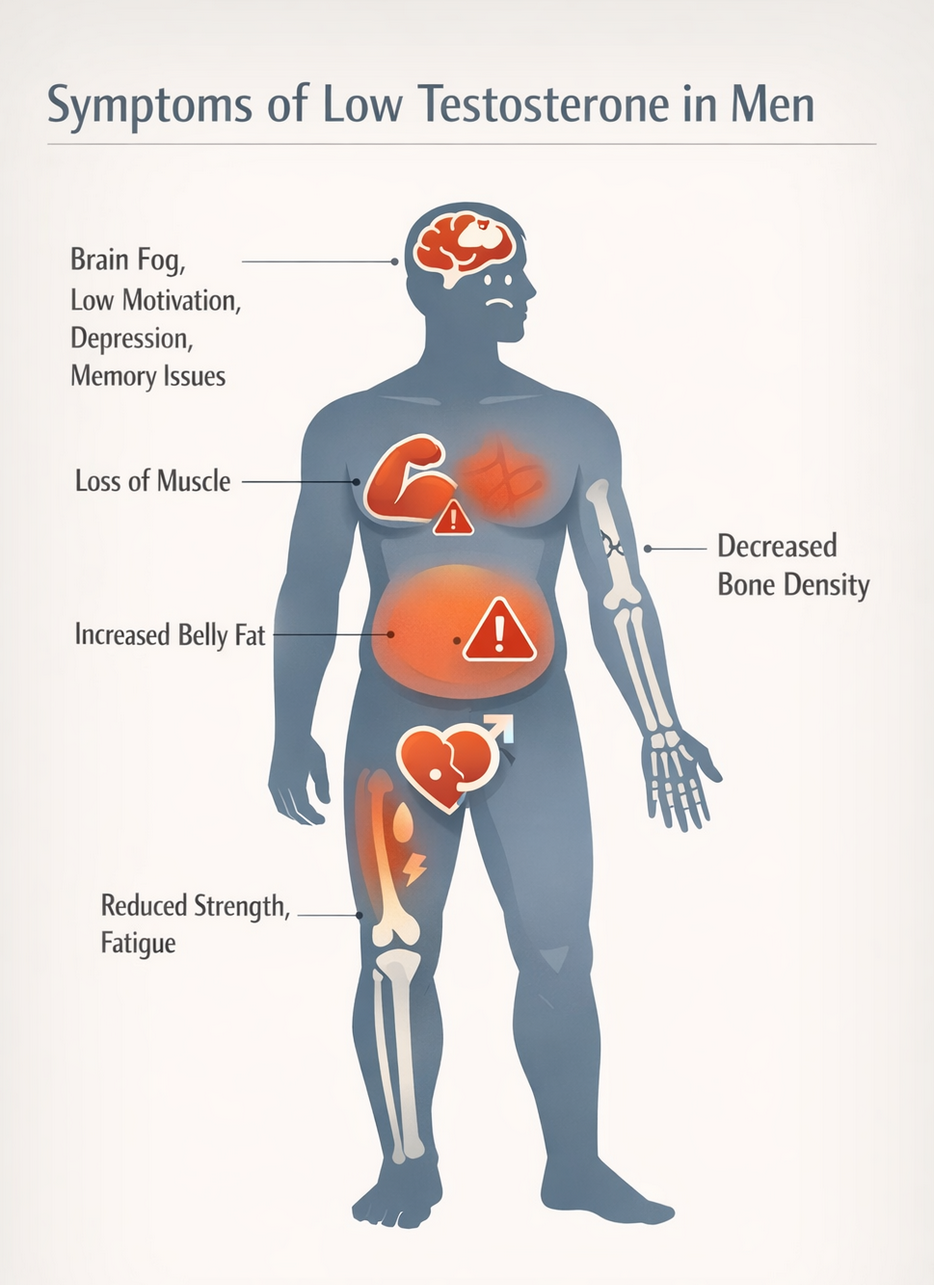
- Loss of muscle mass - Even with the same workout routine
- Increased body fat - Especially around the midsection
- Decreased strength - Weights that used to be easy become harder
- Reduced bone density - Increased risk of fractures (often silent until a break)
The Overlooked Symptoms
Here's where it gets interesting. These symptoms are often not associated with low testosterone, but they should be:
Cognitive and Mental
The cognitive effects of low testosterone are massively underappreciated. Many men with low T think they're just getting older, stressed, or depressed, when testosterone might be a major contributor.
- Brain fog - Difficulty thinking clearly, feeling "cloudy"
- Poor concentration - Trouble focusing on tasks
- Memory issues - Forgetting things more than usual
- Low motivation - Just can't get started on things
- Reduced drive and ambition - That fire you used to have is gone
- Depression or low mood - Not necessarily clinical depression, but feeling "flat"
- Irritability - Shorter fuse, things bother you more
- Anxiety - Feeling more nervous or worried than usual
If testosterone is like the engine for your body, it's also like the spark plugs for your brain. When it's low, mental ignition becomes harder. That project you've been putting off? It's not just procrastination - your brain might literally lack the chemical push it needs.
Energy and Well-being
- Fatigue - Tired even after sleeping
- Decreased energy - Just don't have the get-up-and-go
- Poor sleep quality - Trouble falling or staying asleep
- Reduced endurance - Get winded more easily
Body Composition
- Loss of body hair - Slower growth or thinning
- Hot flashes - Yes, men can get these too
- Sweating changes - Increased night sweats
The Estradiol Overlap
Here's something crucial to understand:
Many "low testosterone" symptoms can also be caused by estrogen imbalance.
High estradiol (relative to testosterone) can cause: low libido, ED, brain fog, water retention, mood swings, and gynecomastia.
This is why it's important to test both testosterone and estradiol. See Chapter 12: Estrogen Management for details.
The Insidious Nature of Low T
Low testosterone typically doesn't happen overnight. It's a gradual decline that you adapt to without realizing.
Many men on TRT describe exactly this feeling. They didn't realize how bad they felt until they felt better.
This is also why low testosterone is so often missed. Men with low T often say things like:
"I'm just getting older.""Work is stressful, that's why I'm tired.""My relationship is the problem, not my sex drive.""Everyone loses muscle after 40."
Maybe those things are true. Or maybe low testosterone is making all of them worse.
Symptom Severity vs. Testosterone Levels
Here's the frustrating truth: there's no direct correlation between testosterone levels and symptom severity.
| Person | Total T | Symptoms |
|---|---|---|
| Guy A | 280 ng/dL | Minor symptoms, feels okay |
| Guy B | 420 ng/dL | Severe symptoms, feels terrible |
| Guy C | 350 ng/dL | Moderate symptoms |
Why the difference? Factors like:
- Androgen receptor sensitivity
- SHBG levels (free T availability)
- Duration of low levels
- Individual variation
- Concurrent health issues
This is why symptoms AND lab values both matter. A guy with a testosterone level of 400 who feels awful is a valid candidate for treatment evaluation, while a guy at 280 who feels fine might just need monitoring.
When to Suspect Low Testosterone
Consider testing if you have:
- Multiple symptoms from the lists above
- Symptoms that have gradually worsened
- No other obvious explanation (depression, thyroid, etc.)
- Risk factors for low T (obesity, sleep apnea, chronic opioid use, prior steroid use)
- Age over 40 with new symptom onset
- Infertility issues
Symptoms That Warrant Urgent Attention
While most low-T symptoms develop slowly, some situations need prompt evaluation:
See a doctor soon if you have:
- Sudden loss of libido or erectile function
- Visual disturbances with low T symptoms (possible pituitary tumor)
- Severe depression or suicidal thoughts
- Testicular pain, lumps, or changes
- Breast lumps (not just enlargement)
- Unexplained bone fractures
The Depression Connection
The relationship between testosterone and depression is complex and bidirectional:
- Low testosterone can contribute to depressive symptoms
- Depression itself can lower testosterone
- Antidepressants can affect testosterone and sexual function
- Some men with low T are misdiagnosed with depression
If you're depressed, get your testosterone checked. If your testosterone is low, consider that it might be contributing to mood issues. But don't expect TRT to be a cure for clinical depression - it's one piece of a larger puzzle.
Symptoms of Low Estradiol
While we're here, let's mention that estradiol that's too LOW can also cause problems:
Low estradiol symptoms (E2 < 20 pg/mL):
- Joint pain and stiffness
- Dry, cracking joints
- Low libido (yes, too low E2 kills libido too)
- Poor mood, depression, irritability
- Fatigue
- Bone density loss over time
Some guys get so afraid of estrogen that they crash it too low (usually with aromatase inhibitors). This is just as bad as having it too high. You need estradiol - it's essential for male health. The goal is balance, not elimination.
More on this in Chapter 12: Estrogen Management.
Quick Recap
The Classic Signs
- Low libido, ED, reduced sexual function
- Loss of muscle, increased fat
- Decreased strength and bone density
The Overlooked Signs
- Brain fog, poor concentration, memory issues
- Low motivation, reduced drive
- Depression, irritability, anxiety
- Fatigue despite adequate sleep
- Feeling "flat" or "not yourself"
Important Points
- Symptoms don't always correlate with levels
- Gradual onset makes it easy to miss
- Estradiol imbalance can cause similar symptoms
- Both too-high AND too-low estradiol cause problems
- Get tested if you have multiple symptoms
Next up: What Affects Testosterone - Lifestyle factors, health conditions, and things you can control (and can't).